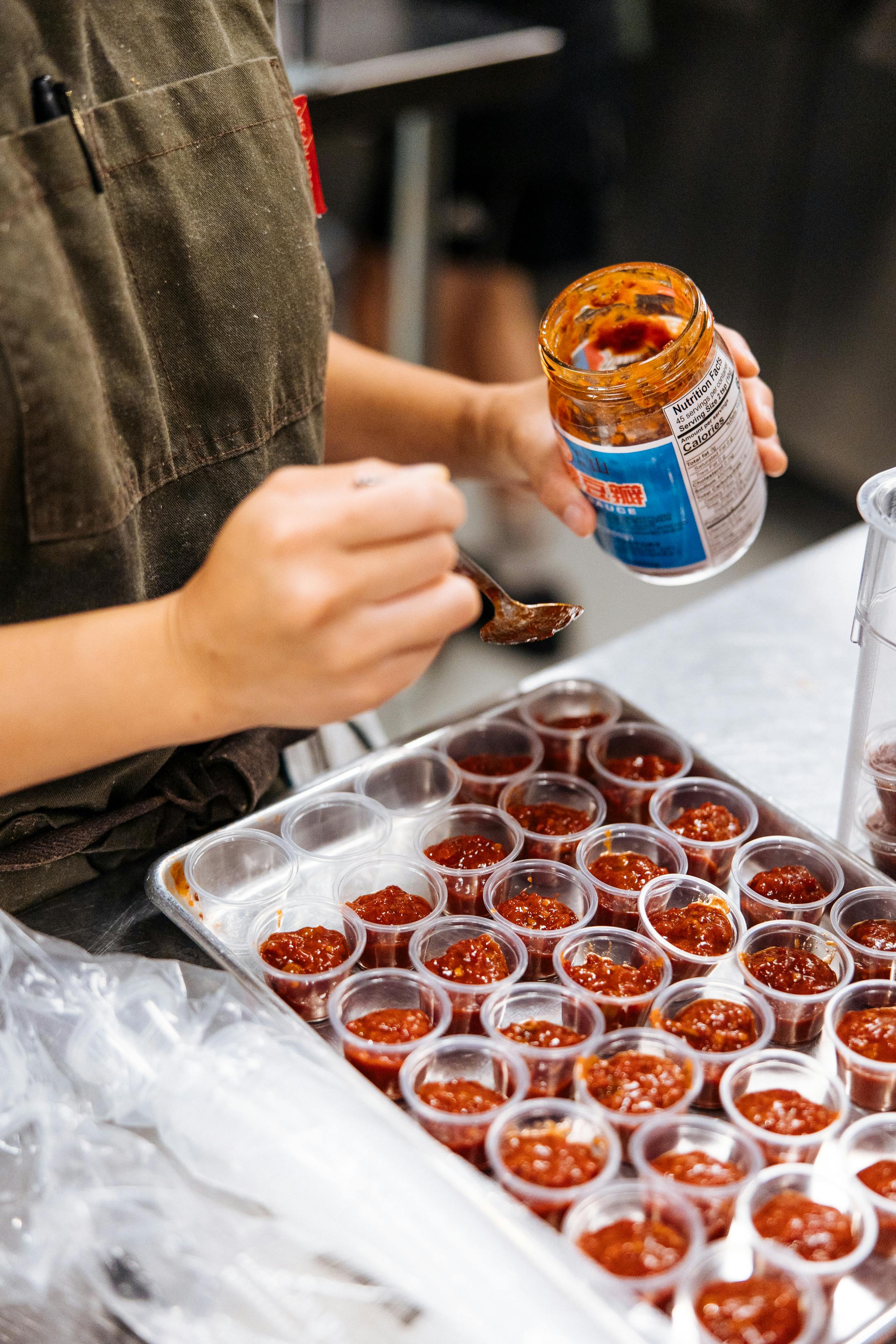
Kitchen automation helps you cut down on errors and speed up your entire operation. This guide covers which processes to prioritise first — so you can build a kitchen that runs more efficiently and holds up as your business grows.
What kitchen automation actually means
Automation isn't about robots or expensive overhauls. For most food businesses, whether you're running deliveries, catering, or a central production setup, it means using technology to handle repetitive tasks, so your team can focus on producing great food.
According to Expert Market Research, Australia’s online food delivery market was valued at AUD $20.92 billion in 2024 and is projected to more than double to AUD $43.12 billion by 2034, a 7.5% annual growth rate driven by demand for faster, more reliable ordering. That growth only compounds if your operation can keep up. This makes automation a prerequisite for growth.
The best systems slot quietly into your existing workflow. When they're working well, you barely notice them.
Digitisation vs automation: Switching from paper dockets to a tablet is digitisation — it’s a useful step, but someone still moves the information manually. Automation removes that step entirely. Orders flow from the customer to your kitchen, stock levels update, and dispatch gets flagged — all without anyone needing to touch it.
Why operators get stuck: Most problems come from adopting tools without a clear purpose. Technology layered over a broken process just creates a more expensive broken process. Start with one specific pain point: dropped orders on a busy Friday, stock-outs mid-service, dispatch that’s always running late, and solve that first.
The 5 processes worth automating first
These areas consistently deliver the strongest return for kitchen operators:
1. Centralised order management
Manually re-entering orders from multiple delivery apps is a reliable way to create errors, especially at peak times. Pulling every channel into a single system means your team has full visibility, and orders stop slipping through the cracks.
2. Kitchen display systems (KDS)
Paper dockets pile up, get misread, and blow off the pass. A KDS replaces that with a clear, prioritised digital queue for each station, less shouting across the kitchen, fewer mistakes, and smoother service.
3. Automated stock tracking
Running out of a key ingredient mid-service is avoidable. Real-time stock tracking based on actual sales, rather than end-of-day manual counts, keeps you ahead of shortages and reduces over-ordering. Tighter purchasing decisions mean better margins over time.
4. Delivery and dispatch coordination
When kitchen output and driver timing aren't in sync, delays compound quickly. Automated dispatch ensures orders are only released when they're genuinely ready, drivers are matched by proximity, and prep stays aligned with pickup — even when volume spikes.
5. Performance data
Most operators make decisions based on gut feel because pulling reports manually takes time nobody has. Automation gives you real-time visibility over prep times, order volumes, and peak periods without any extra work, cutting operational costs for a kitchen running on tight margins, which can add up fast.
What to leave alone for now
Not everything benefits from automation, and stretching too far too early creates more problems than it solves.
- Low-impact back-of-house tasks that don't affect speed or revenue aren't worth the effort yet.
- Quality control and final presentation still need human judgment — these are often what define your brand.
- Early-stage operations with modest order volumes may find the ROI takes longer to materialise; start with one or two well-chosen tools rather than a full overhaul.
How to work out where to start
Identify your biggest bottleneck: Where does your operation slow down most often? Where do errors cluster? That’s almost always the right place to begin — not the flashiest fix, the most painful one.
Weigh impact against effort: High-impact, low-complexity changes come first. More involved integrations can follow once your foundation is stable.
Build gradually: One or two well-implemented changes build team confidence and deliver visible results faster than trying to automate everything at once. As your workflows stabilise, adding more advanced tools becomes much less disruptive.
Is automation worth the investment?
For smaller operations, even a single integration, a unified order system, or a KDS replacing paper can make an immediate difference. You don't need high volume to benefit.
At scale, it becomes harder to operate without it. Managing multiple ordering channels or brands without connected systems is exhausting and error-prone. The infrastructure stops being a nice-to-have and becomes a prerequisite for growth.
The upfront cost is real, but the returns — fewer errors, sharper labour allocation, greater order capacity — compound over time. Industry data suggests that restaurants adopting automation tools report revenue increases in more than half of cases. It's not just about efficiency; it's about building a business that can actually scale.
See how your kitchen could run with fewer errors and faster output
If you're dealing with missed orders, delays, or limited visibility across your operation, it may be time to rethink how your kitchen is set up.
Purpose-built kitchen environments with integrated infrastructure make automation easier to implement, coordination more reliable, and scaling far less stressful. Explore ChefCollective’s production kitchen spaces and see how a kitchen designed for efficiency can help you build a more consistent, scalable operation.